

Stainless Tank & Mix repairs stainless steel tanks, vessels, vats and mixers for food, dairy, beverage, chemical and process plants.
Maybe the tank was sucked in overnight, a weld has cracked, or the jacket is leaking into the product. Maybe there are no drawings and the company that built it closed years ago. Before you write it off, send us photos. We’ll look at the damage and tell you straight whether it’s worth repairing or whether a replacement makes more sense.
We repair tanks we built and tanks made by others. Depending on the job, we do the work on site or bring it back to our Minto workshop.
What We Repair
Vacuum damage
A tank washed with hot caustic and then rinsed cold can collapse in seconds if its vent can’t keep up. We assess how far the shell has gone, and either repair it or rebuild the damaged section.
See a vacuum repair ›Cracks and leaks
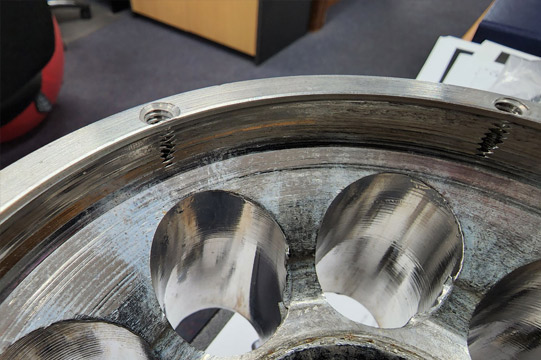
Stress cracks, failed welds, and jackets leaking into the product. We find where the leak starts, cut out the damage and weld in new material.
See a silo repair ›Bases and outlets
When a tank base has been patched too many times, we replace it, on site where we can. We also repair the outlets and fittings around it.
Send us photos ›Mixers, agitators and blenders
Bent or broken agitator blades, worn shaft seals, tired ribbon assemblies and shear mixing heads. We repair what can be saved and make new parts for what can’t.
See a mixer repair ›Accidental and transport damage
Impact damage, and new equipment that arrives on site damaged. We repair it so the work blends in, following existing weld lines where we can.
See a hopper repair ›Repair or Replace? We'll Tell You Straight
Stainless steel is hard to bring back to new condition, but a damaged tank can usually be repaired to sound working order. That’s often the quickest way back into production.
Sometimes a repair stops making sense. On one bag filter vessel, a pulse cleaning system shook the square joints until they cracked, and each welding repair left the structure more brittle than before. On another job, a customer’s shear mixing head had been repaired several times before it finally needed replacing. When a part keeps failing in the same place, we’ll say so, and we’ll explain why.
When replacement is the answer, we build the new equipment to fit the old one’s place: the same overall height, the same outlet height, and pipework connections that line up with what’s already there. We’ve measured up and built a replacement tank in 7 days, and replaced a 750 litre chocolate melt tank without changing the platform or bench its operator worked from.
No Drawings? Send Us Photos
Most tanks we’re asked to repair have no drawings, and the original maker is often long gone. That’s fine. To give you an answer quickly, send us:
- Photos of the whole tank, the damage, and the nameplate if it has one
- Rough sizes: diameter, height and outlet height
- What it holds, and at what temperature
- What’s around it: door widths, platforms and the line it feeds
- How long you can be without it
We’ll measure on site when it’s needed, and we can reverse engineer a replacement from the old tank itself.
Repairs in Hard‑to‑Reach Places
Tanks rarely fail somewhere convenient.
24,000 L mix tank in a tight tank farm
A 24,000 litre mix tank sat 100 mm from the wall on one side and 100 mm from the next tank on the other, with a maze of pipework underneath, in 30°C heat and 98% humidity. It took two and a half weeks, and what looked like a write-off went back into service.
Read the story ›250,000 L silo, 40 m from crane access
A leaking 250,000 litre food-grade silo, 21 metres tall, stood 40 metres from the nearest place a crane could set up. We reached the shell with a 90 tonne crane and a man box.
Read the story ›2 t weigh silo, five storeys up
A vacuum-damaged 2 tonne weigh silo stood five storeys up, with the building around it. We reverse engineered it, built the replacement in Minto, partitioned off the area to protect production, removed the old silo and installed the new one.
Read the story ›How to Prevent Vacuum Damage
Most vacuum collapses we see follow the same pattern. The tank is hot, from production or a hot caustic wash. Cold water goes in, the air inside cools and contracts, and if the vent can’t let enough air in, the shell is pulled inwards. To prevent it:
- Make sure the vent can cope with your whole cleaning cycle, including a cold rinse straight after a hot wash
- Keep vents clear, and check them after any change to pipework
- Don’t reroute or reduce a vent without checking the vessel design first
One tank we built was sucked in after its vent pipe was rerouted on site and became blocked. Most of it had to be replaced. If you’re changing a cleaning cycle or the pipework around a vessel, talk to us first.



Frequently Asked Questions
Do you repair tanks you didn't build?
Yes. We repair equipment made by other companies as well as our own, including tanks with no drawings and no surviving maker. We work from photos and measurements, and measure on site when needed.
Can a sucked-in tank be repaired?
Often, yes, depending on how far the shell has deformed and whether the welds have cracked. Some tanks can be repaired in place. Others need a section rebuilt or the tank replaced. Photos of the whole tank help us tell you which.
Do you repair tanks on site?
Yes. We repair tanks on site, including in tight tank farms and at height, and our team is confined space trained. Smaller equipment often comes back to our Minto workshop, where the repair is quicker.
How quickly can you help?
We quote quickly and turn repair work around fast. When a tank can’t be saved, we can measure up and build a replacement in days: one replacement tank took 7.
What equipment do you repair?
Stainless steel process and storage tanks, silos, vats, jacketed vessels, hoppers, mixers, agitators and blenders used in food, dairy, beverage, chemical and process plants.
Send Us Photos of the Tank
Send photos of the whole tank and the damage, with rough sizes and what it holds. We’ll tell you straight whether to repair or replace it, and what happens next.
Phone 02 9820 2112 or contact us.