Home / Solutions / Silos, Tanks, Vessels & Vats / Foam Concentrate Tanks

Stainless Steel Foam Concentrate Tanks for Firefighting: Atmospheric and Bladder, AFFF Replacement

Stainless Tank & Mix designs and builds stainless steel foam concentrate tanks for fixed firefighting foam systems. We build atmospheric and bladder tanks, vertical or horizontal, from 25 litres up.

Every foam concentrate tank is built in our Minto workshop to your fire engineer's specification and the foam maker's data sheet, in 304 or 316. Bladder tank shells are pressure vessels, which we design in house to AS 1210 and have certified.

Moving off AFFF foam? We'll build the replacement to fit the old tank's footprint and connections. For bladder tanks that are staying, we replace perished bladders.

Who We Build For

We build foam concentrate tanks for:

Chemical plants

Fuel terminals and depots

Power stations

Mine sites

Warehouses storing flammable goods

Airport fuel farms and aircraft hangars

Fire engineers who need a tank built to their specifications

Fire protection contractors installing fixed foam systems

We build the tank to the fire engineer's system design and specifications.

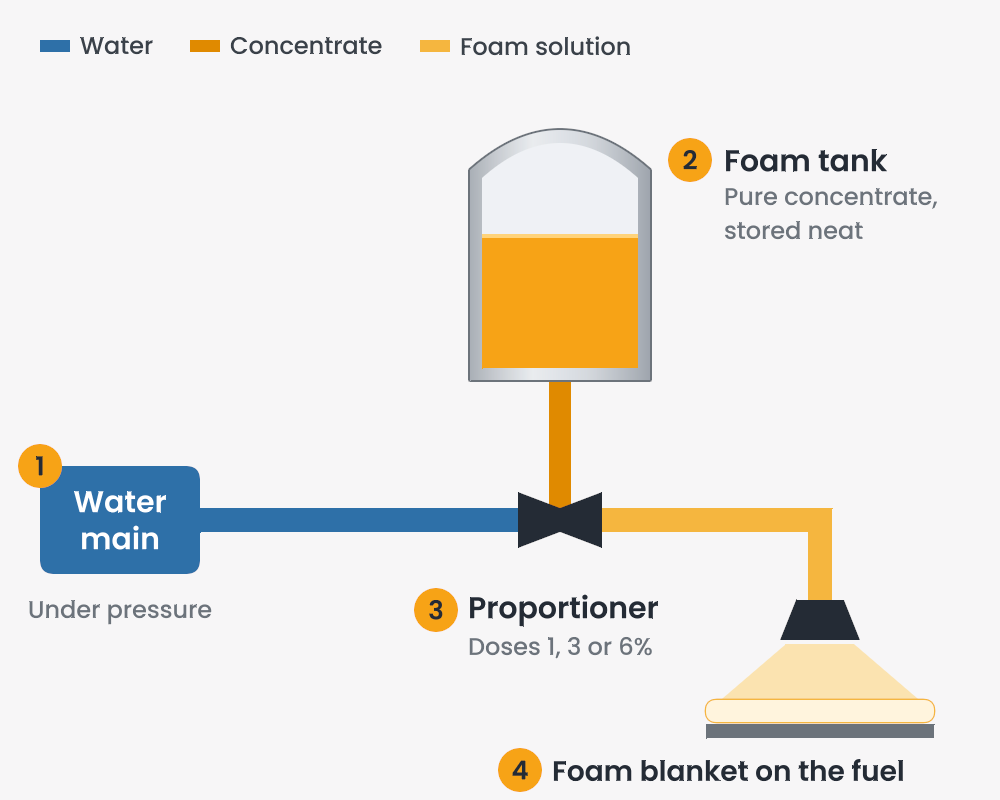
How a fixed foam system works: water from the main and concentrate from the foam tank meet in the proportioner at 1, 3 or 6%, and the nozzle lays a foam blanket on the fuel

Atmospheric or Bladder?

Your fire engineer chooses the type. We build both, vertical or horizontal.

An atmospheric tank is vented to air through a pressure/vacuum vent. When the system runs, a foam pump or proportioner draws the concentrate out. It's simple to inspect and top up, and it's the type we build most.

A bladder tank holds the concentrate in a rubber bladder inside a steel pressure vessel. When the system runs, the system's own water fills the shell around the bladder and squeezes the foam out to the proportioner. There's no foam pump and no power to fail, so it works in a blackout.

Either way, the foam only meets the water in the proportioner, at 1, 3 or 6%, when the system goes off. That's why the tank holds pure concentrate, and why foam tanks are small: most are under 10,000 litres.

Atmospheric tank or bladder tank: side by side
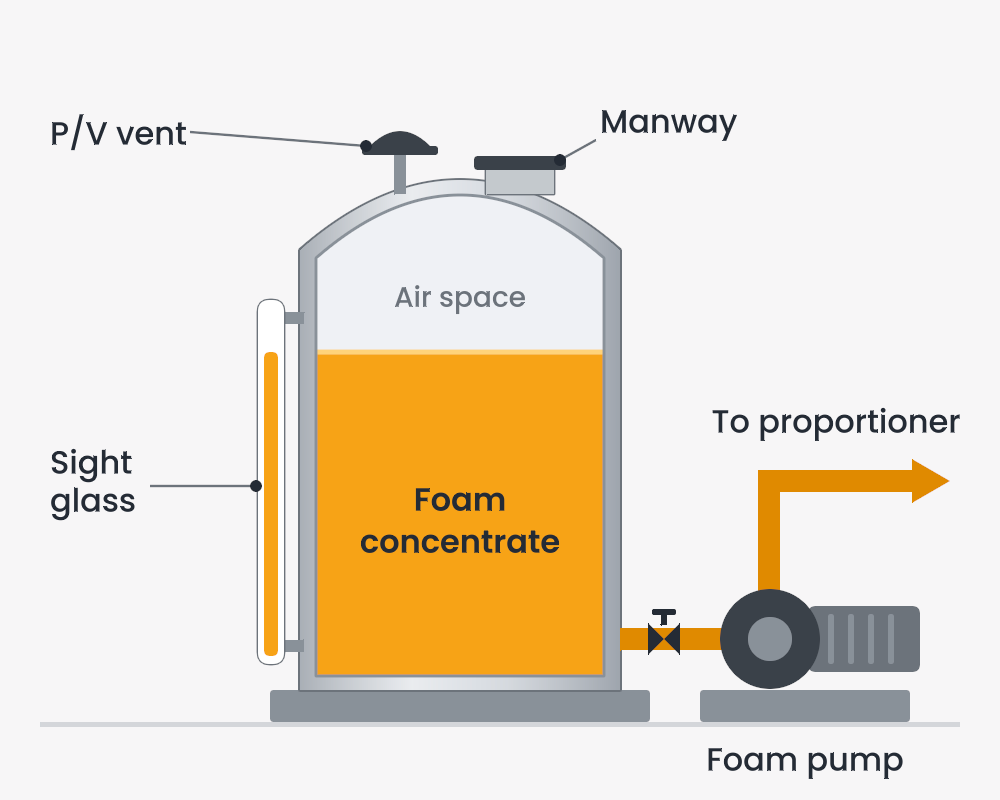
Cutaway of an atmospheric foam concentrate tank with P/V vent, manway, sight glass and foam pump Vented to air

Atmospheric tank

An open, vented tank. A foam pump draws the concentrate out when the system runs.
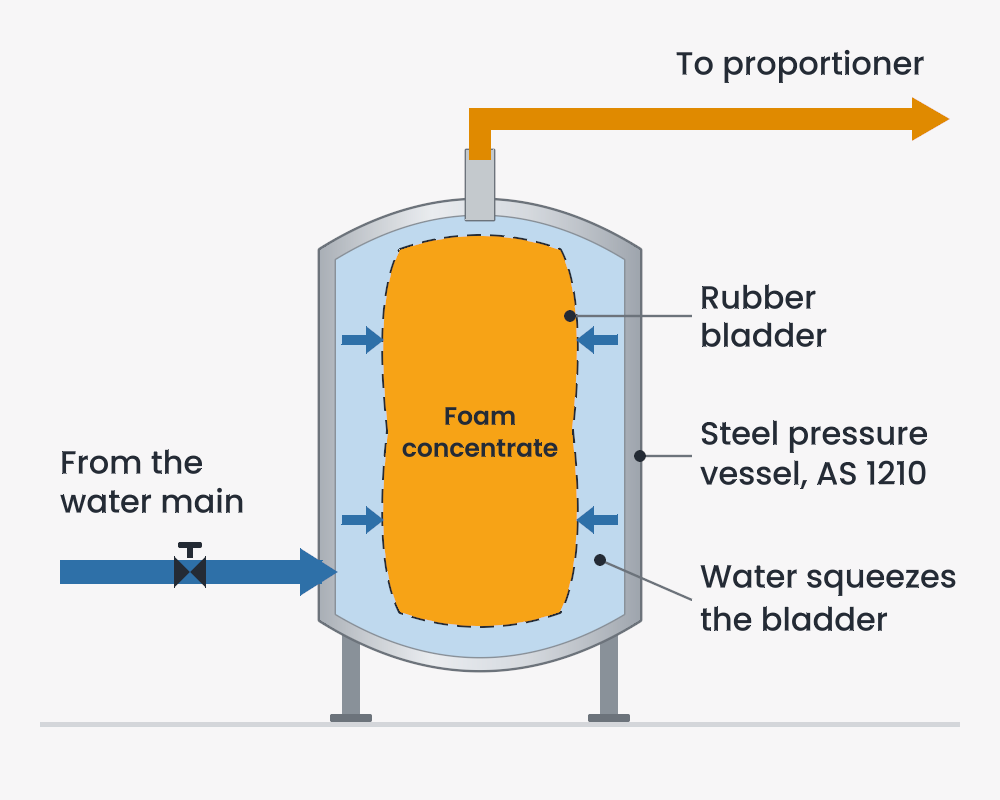
Cutaway of a foam bladder tank: water from the main squeezes the rubber bladder inside a steel pressure vessel Pressure vessel

Bladder tank

A rubber bladder inside a steel pressure vessel. The system's own water squeezes the foam out.

Atmospheric tankBladder tank
How foam leaves the tankDrawn out by a foam pump or proportionerSqueezed out by the system's own water pressure
Power neededYes, for the foam pumpNone
Pressure ratingNone, vented to airPressure vessel, designed to AS 1210
Inspection and refillingOpen the manway, check the level, top upRefill to the foam maker's procedure; the bladder needs inspecting
Where it's usedSystems with a foam pump or pump proportionerSystems that run on water pressure alone

Specifications

SpecificationFoam concentrate tanks
CapacityFrom 25 litres up; most foam tanks are under 10,000 litres
TypesAtmospheric; bladder (pressure vessel)
OrientationVertical or horizontal
Grades304 or 316 stainless steel, to the designer's specification
Pressure vessel designAS 1210, designed in house, third-party certifier where required
Built toYour fire engineer's specification and the foam maker's data sheet
BladdersNew bladder tanks built; bladders replaced in existing tanks
Quote2 to 7 days, depending on how accurate the specs are

Fittings and Options

We fit what the system needs. Typical options:

  • A sight glass or level gauge, so you can read the level without opening the tank
  • A pressure/vacuum or conservation vent, so the tank can't suck in or blow out (how vacuum damage happens)
  • An expansion dome, which keeps the air surface small so the concentrate keeps
  • A manway for inspection
  • Fill and drain connections, with the drain at the true low point
  • A sample point
  • Bunding, sized to hold the contents
  • Insulation and stainless cladding for tanks in full sun

Tell us what the fire engineer has specified, and we'll build it in.

Bladder Replacement

Bladders perish over time. When one fails, the tank can't push its foam out properly, even though the steel shell may have years left in it.

We replace bladders in existing foam bladder tanks. When the shell itself is past it, we build a new tank.

A move to fluorine-free foam is a good time to do it. Check with the foam maker that the bladder material suits the new concentrate.

Send us the tank's nameplate, a few photos, its capacity and the foam data sheet, and we'll tell you which way it's heading.

Stainless or Carbon Steel?

Carbon steel

Carbon steel bladder tanks rely on an epoxy lining inside. The lining needs inspecting, and once it breaks down, the steel underneath starts to rust.

Stainless

Stainless has no lining to fail. It stands up to sun, heat and washdown, it lasts for decades, and it's easy to clean if the site changes foams again.

304 or 316

Grade is the designer's call. Some specify 316, but for plenty of systems 304 is fine. We go by the foam maker's data sheet.

Changing From AFFF?

Old AFFF tanks can keep giving off PFAS after cleaning, and the new foam may need a different volume. So some sites clean and keep the old tank, and others replace it.

If yours is being replaced, we measure the old tank and its connections and build the new one to drop into the same footprint. We've done it for a multinational chemical company: the old tank came out and the new one went straight back in.

Our guide covers the rules, the clean-or-replace decision and what happens to the old tank.

Read the AFFF change-out guide

Replacement stainless steel tank on a truck, built to match the old tank and its connections

Built in Minto

We've built foam tanks from a 25 litre unit up, atmospheric and bladder, and we replace bladders in existing tanks. Foam concentrate is one more liquid to store properly, and tanks for chemicals and flammable liquids are everyday work for us.

Every tank leaves Minto with a stainless steel label. It's there for keeps.

3 × 15,000 litre storage tanks built to AS 1692, the standard for flammable and combustible liquids

90,000 litre 316 chemical storage tank, insulated and clad

Custom pressure vessels, designed in house to AS 1210

Replacement tank matched to the old connections

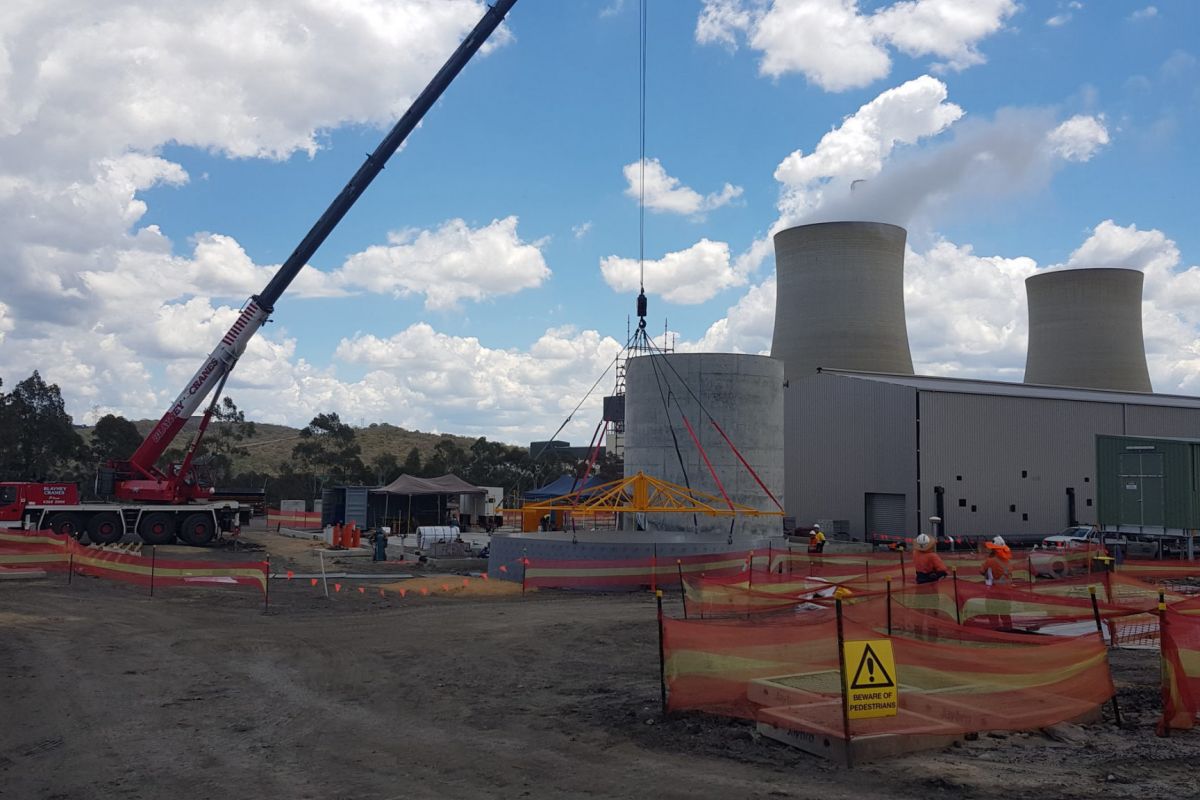
600,000 litre tank built on site at Mount Piper Power Station

Tank installation, cranes and access included

What to Send for a Foam Tank Quote

Send us:

  • The foam type and its data sheet
  • The volume from your fire engineer's calculation
  • Atmospheric or bladder, vertical or horizontal
  • Site location and access
  • The space available, or the footprint to match
  • Photos and connection details of the existing tank, if you're replacing one
  • When you need it

The more accurate the specs, the faster the quote. Expect it in 2 to 7 days. Attach photos or drawings to your first enquiry, and we'll reply within 2 business hours, Monday to Friday, 9 am to 4 pm.

Frequently Asked Questions

What's the difference between an atmospheric and a bladder foam tank?

An atmospheric tank is vented to air, and a foam pump or proportioner draws the concentrate out. A bladder tank is a pressure vessel: the system's own water squeezes a rubber bladder and pushes the foam out, with no pump or power. Your fire engineer picks the type.

Does a foam bladder tank need to comply with AS 1210?

A bladder tank's shell is a pressure vessel, so it's designed to AS 1210. We design pressure vessels in house and use a third-party certifier where required.

Should a foam concentrate tank be 304 or 316 stainless steel?

It's usually the designer's call. Some specify 316, but for plenty of systems 304 is fine. Check the foam maker's compatibility data, especially for a fluorine-free foam.

How big does a foam concentrate tank need to be?

Your fire engineer's foam calculation sets the volume. Because the foam goes into the water at only a few per cent, most foam tanks are under 10,000 litres. We've built them as small as 25 litres.

Can you build a new tank to fit my old tank's footprint?

Yes. We measure the old tank and its connections on site, and build the replacement to drop into the same space and pipework.

Can I reuse my old AFFF tank for fluorine-free foam?

Sometimes. It needs a specialist clean with testing before and after, because PFAS can rebound into the new foam, and the new foam may need a different volume. Our AFFF change-out guide explains both.

Do you replace bladders in existing foam bladder tanks?

Yes. Send us the nameplate, photos, capacity and the foam data sheet. If the shell is past it, we'll build a new tank.

How long does a foam tank quote take?

2 to 7 days, depending on how accurate the specs are. Build time depends on the size and type, and we'll give you a date with the quote.

Send Us Your Foam Tank Spec

Call us on (02) 9820 2112, or send the foam data sheet, the fire engineer's numbers and any drawings through our contact form.

All our tanks are designed and built from scratch with pride and care in our Minto workshop. If you can think it, we can build it, and do it better.

Phone: (02) 9820 2112·Email: bdobfsctd-410c6f@stainlesstankandmix.com.au·Workshop: 4 Pembury Road, Minto NSW 2566