
Home / Resources / Guides / Process Equipment Repairs
GuideRepairs

Process Equipment Repairs: What We Fix, When It’s Worth Fixing, and What Happens to the Old Gear

By Brendan Firth  |  November 2026

Process equipment repairs usually start with a phone call on a bad day. The auger’s chewing itself up, the kettle jacket is weeping, or a hopper that’s been belted for years has finally split. And the company that built it is long gone, or overseas.

We fix stainless process equipment in our Minto workshop and on site, whoever built it. A fair few of the repair calls we get end in a replacement, and we’ll tell you which way yours is heading, and why.

Send Photos First

Before anyone drives out, send us:

Photos of the failure, close up and from a step back
The nameplate, if there is one
Photos of the connections
Rough measurements
What the equipment does, and how often it runs
How long you can be without it

We work from photos and measurements first, and come out to measure on site when the job needs it. Tanks have their own page: see tank repairs.

What We Repair, and What Usually Goes Wrong

Why Stainless Steel Fails

Stainless steel doesn’t rust like mild steel, but it does fail. The two failures we see most are stress corrosion cracking and fatigue.

Stress corrosion cracking. It needs three things at once: metal under tension, chlorides and heat. The tension can be left in the steel by welding, or come from how the equipment is loaded. Chlorides come from salt, chlorine-based sanitisers and some products. The cracks are fine and branching, and they often go unseen until the vessel starts to weep.

Fatigue. Stainless steel hates rapid changes in temperature. A hot wash then a cold rinse, steam in the jacket then cold product: with every cycle, the metal grows and shrinks. Stainless moves more with heat than mild steel does, and spreads heat more slowly, so the stress piles up where hot meets cold. Over years of cycles the metal tires, and a web of hairline cracks appears, like the one below.
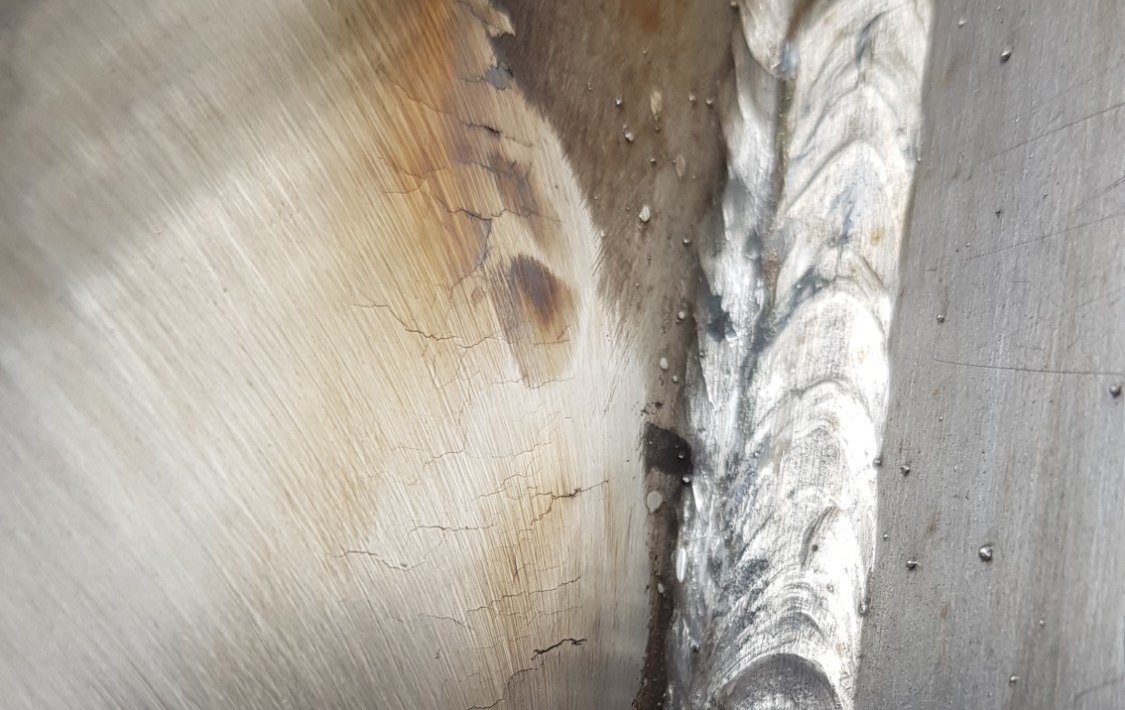
Fatigue: a web of hairline cracks beside a weld, from a recent repair job

This is where repairs go wrong. Weld one crack and the heat opens up another, or the crack runs on past the end of the weld. The repairer ends up chasing cracks across the panel, and nothing gets fixed. When the steel itself is fatigued, more welding is a waste of time and money. That’s why the first thing we check is whether the base metal is still sound. If it isn’t, the answer is new steel, not more weld.

What Goes Wrong, Equipment by Equipment

Jacketed and steam-jacketed kettles. Jackets crack and start to weep, usually at welds that have been heated and cooled thousands of times. Agitator and scraper parts wear out. When a 500 litre gas-fired cooking kettle was past saving, we built a replacement and improved the design for quality, safety, ease of use and fewer parts that could get damaged.

Augers and screw conveyors. Flighting wears thin, shafts bend, and troughs and bearings wear out, faster on abrasive powders. We build new flighting and shafts to suit, like this 4 m × 150 mm auger with a centre spider bearing.

Hoppers. The loading point takes the beating. One customer’s very much abused loading hopper had to be replaced in a hurry. It wasn’t overnight, but it was 2 weeks from enquiry to install, in 3CR12 for wear resistance as well as general corrosion resistance. More on hoppers and chutes.

Agitators and mixing heads. Shafts, seals and impellers wear or get damaged. One customer’s shear mixing head was repaired and refurbished a number of times before it finally had to be replaced.
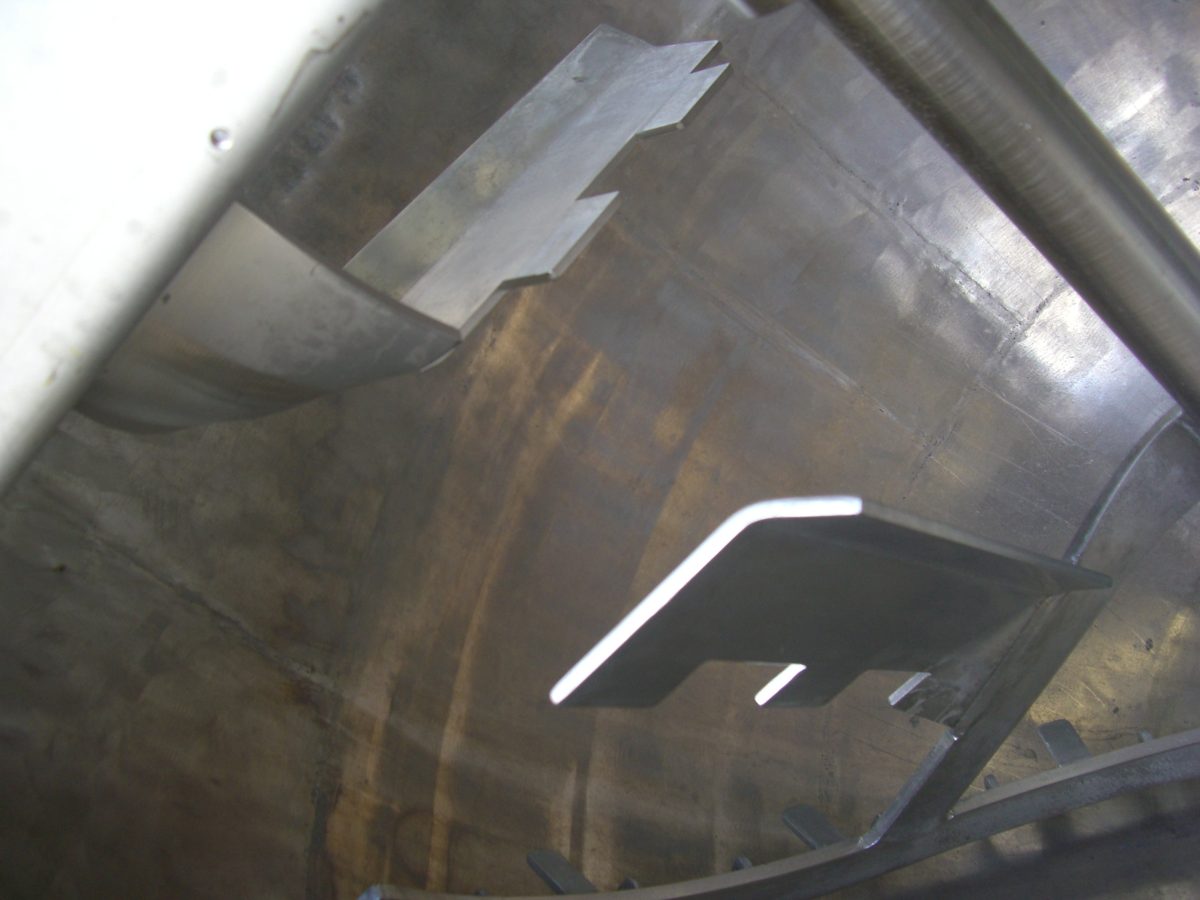
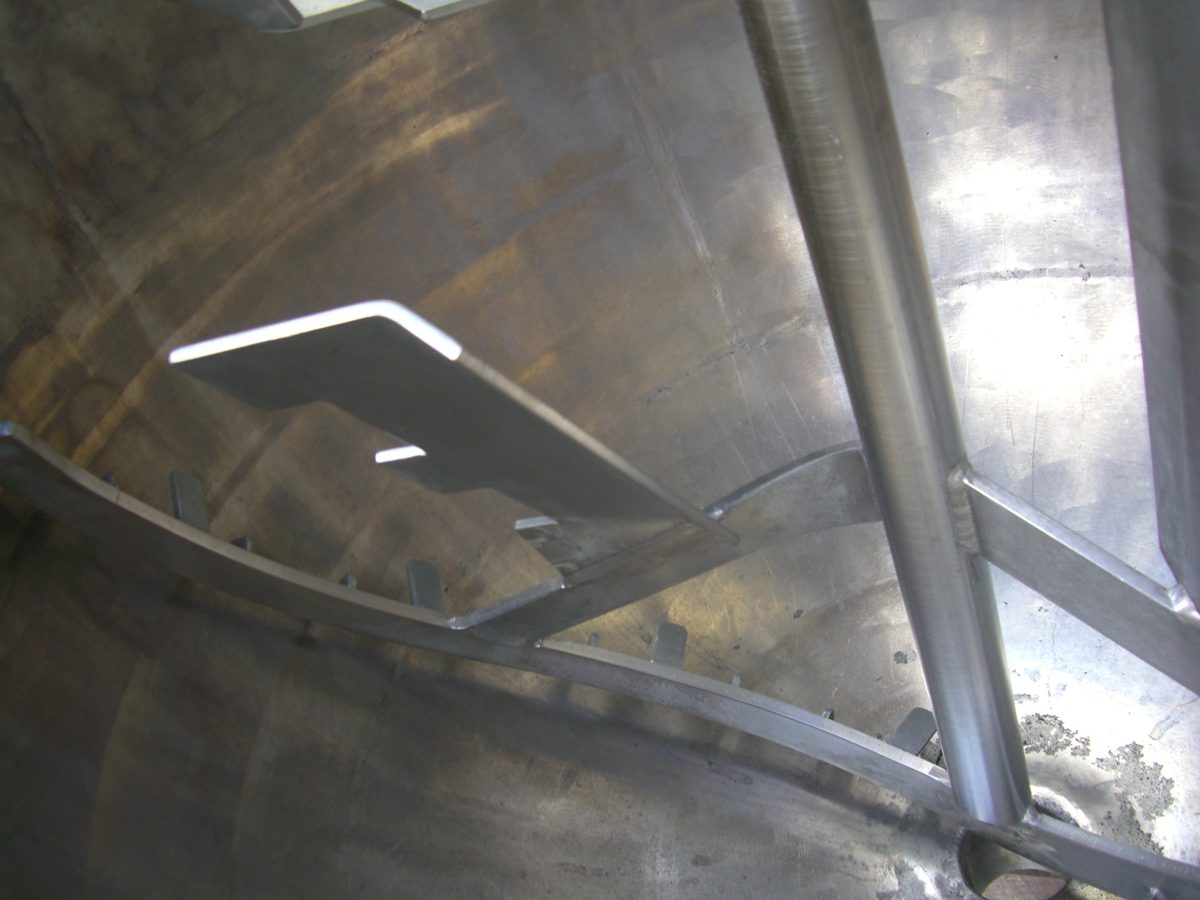
Damaged mixer blades
More of the same mixer’s blades

Glycol jackets. Leaks and cold spots. A leaking jacket is a bigger job than it looks. You often can’t see where it’s leaking from the outside, and after the weld, the product side has to come back to a finish that cleans properly. See jacketed vessels.

Fermenters and brewery tanks. Jackets, fittings and legs. Whatever we weld, the inside has to be ground and finished again so it cleans like the rest of the tank.

Ribbon blenders. Ribbons get bent or worn down, and shaft seals and end plates wear. We build ribbon blenders from scratch, so we know where they give out.
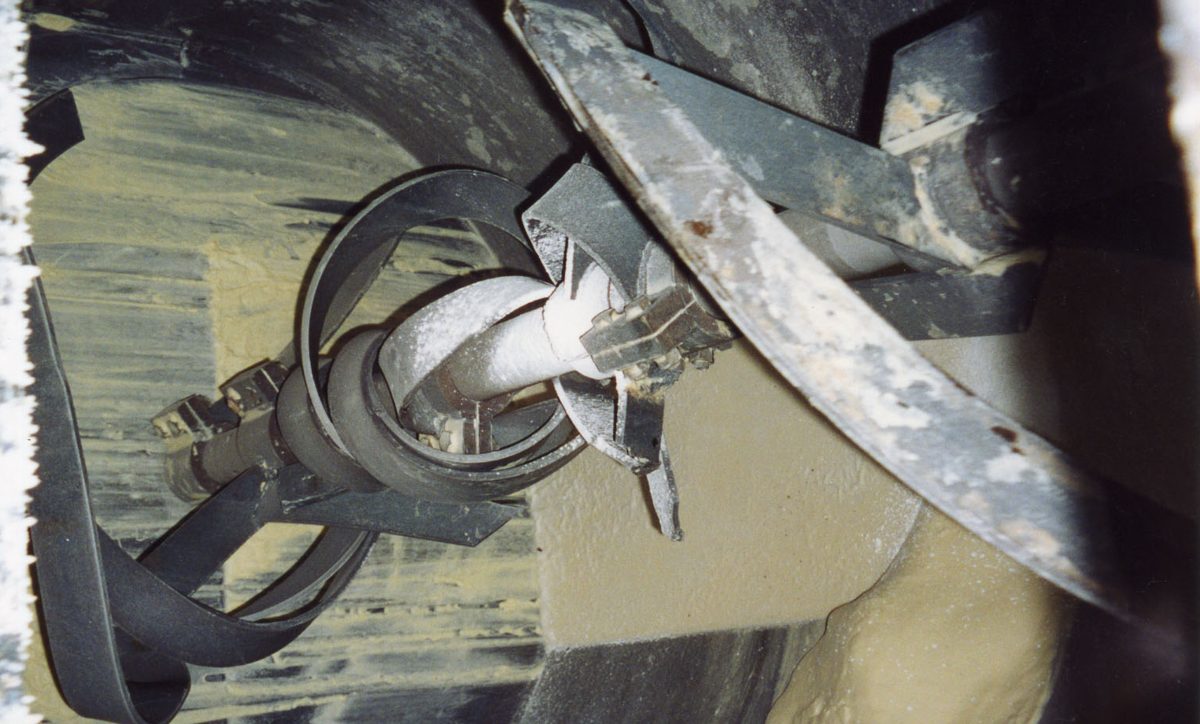
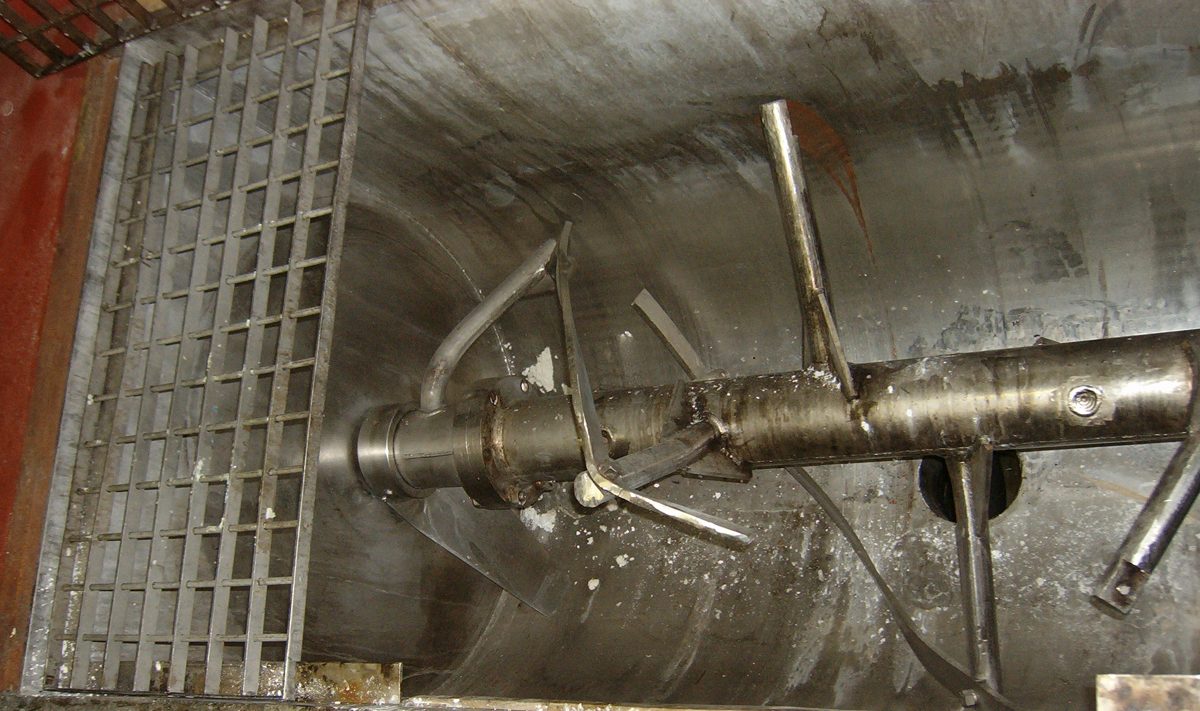
Bent ribbons in a biscuit maker’s chocolate mixer
A damaged ribbon blender for a cleaning chemicals maker

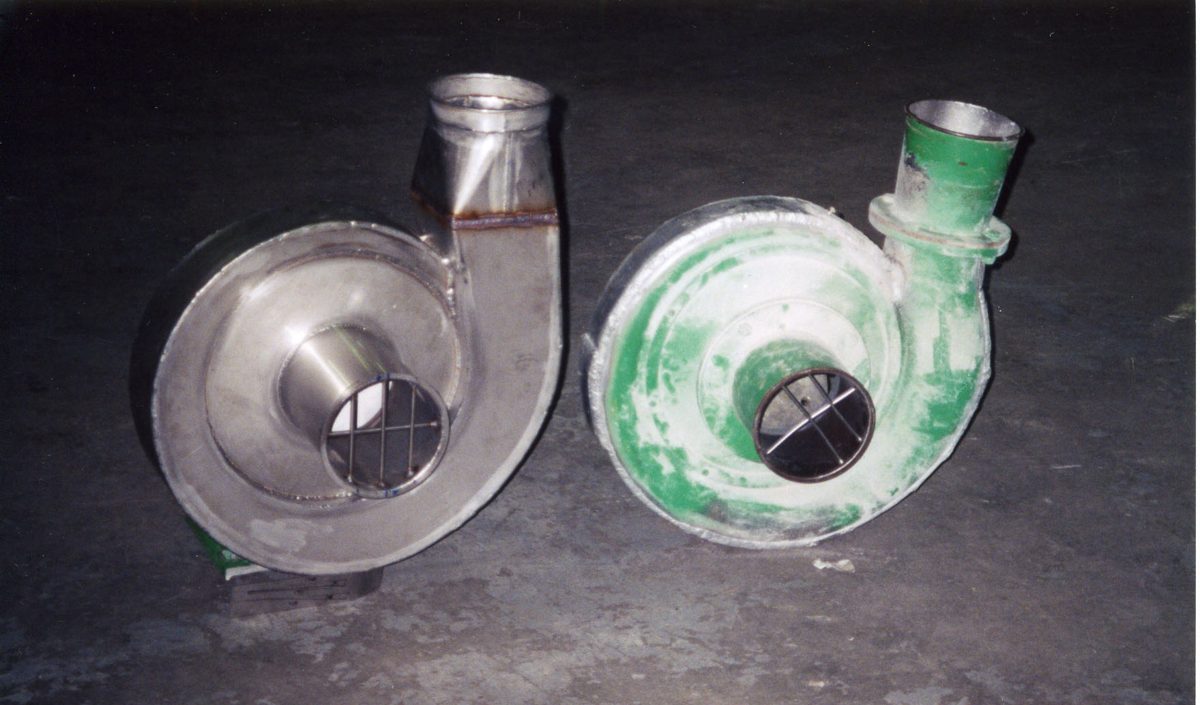
Roasters, fans and the rest. It’s not only mixers. We’ve repaired a damaged nut roaster for a nut retailer, and made replacement fan cowlings for a plastics manufacturer.
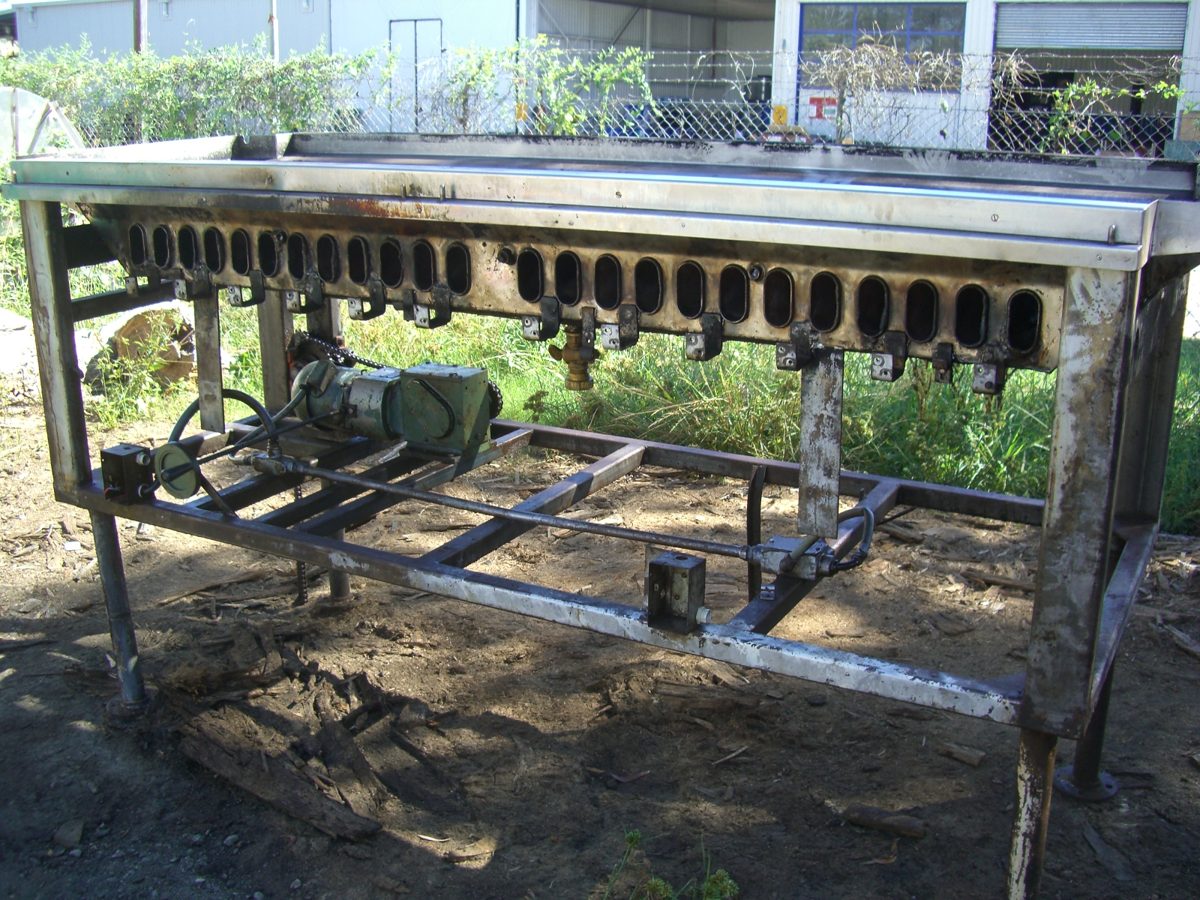
A damaged nut roaster
A new fan cowling next to the old one

Repair or Replace? How We Decide

These are the questions we ask:

  • Is the base metal still sound?
  • Is it the same failure coming back?
  • Can the hygienic finish be restored?
  • Does the repair change its rating (pressure, vacuum or load)?
  • Can you still get the spare parts?
  • How long can the line stay down?

The bag filter vessel below wasn’t our work. We were asked out to look at it and suggest what could be done. A reverse pulse system on the side of the vessel shakes it hard, the square joints become stress points, and over time they crack. Every weld repair made the structure more brittle. At that point a repair only buys time.

The crack in the bag filter vessel
Square joints, where the stress builds up

It can go the other way too. A dented 24,000 litre mix tank that looked like a total write-off was repaired and back in use. And some damage leaves no choice, like the weigh silo crushed by vacuum five storeys up.

When We Replace It, We Build It to Fit

When it’s time to replace, we measure the old unit and build the new one to drop into the same footprint and connections. And we fix the design fault while we’re at it.

One customer had a tank that had been failing for some time before it finally gave out [the budget request had been sitting with accounts]. We measured up and built the replacement in 7 days. The replacement trade waste tank went the same way: measured on site, built to match the pipework, with a few improvements the customer was grateful for.

A quote takes 2 to 7 days, depending on how accurate the specs are. For small breakdown jobs for our regular customers, we can sometimes turn it around the same day.

What Happens to the Old Equipment

The tank that lasts longest is the one that’s still working. A repair that holds keeps a whole vessel in service.

When we do replace something, it’s case by case. Where we can, we bring the old unit back to Minto. At worst we get scrap value for it, and if it’s still usable, we resell it.

The tank we replaced in 7 days is a good example. We repaired it, gave it a coat of paint and sold it as a vegetable oil storage tank. Some tanks can be repurposed like that. If all else fails, we scrap it, mild steel parts and all.

Parts get reused where it makes sense. But I’ll be honest: new is usually more practical and efficient, because old gear tends to be forgotten about.

In the workshop, offcuts and swarf go into dedicated scrap bins, sorted by grade, and on to a metal recycler. That was about 40 tonnes of stainless last year, and it’s been climbing since we got our own laser cutter [more cutting, more offcuts].

Stainless is about as recyclable as a material gets. Around 95% of it is collected and recycled at the end of its life, and new stainless is on average about 48% recycled scrap (worldstainless).

We’re also certified to ISO 14001 for environmental management (our certifications).

Frequently Asked Questions

Yes. Send us photos and measurements, and we’ll tell you whether it can be repaired or should be replaced.

Often, yes, if the base metal is still sound and the leak can be found and reached. If the jacket has cracked in several places, or keeps cracking at the same spot, replacing the kettle can be the better buy.

It depends on the job. A badly damaged loading hopper we replaced took 2 weeks from enquiry to install. Small breakdown repairs for regular customers can sometimes be turned around the same day.

Where we can, we bring it back to Minto. It gets resold if it’s still usable, repurposed if it can be, or sorted by grade and sent to a metal recycler.