

Home / Industries / Water Treatment
Stainless Steel Tanks for Water Treatment Plants
Stainless Tank & Mix designs and fabricates stainless steel tanks for water treatment and wastewater treatment plants across Australia. Every tank is engineered and built in our Minto workshop in south-west Sydney, from 2 litres to 600,000 litres and beyond, in 304, 316L and duplex stainless steel.
We’ve been designing and building stainless steel process equipment since 1974. Water and wastewater projects get the same hygienic fabrication standards we apply to food, dairy and pharmaceutical work: full-penetration welds, crevice-free internals, pickled and passivated surfaces, and full documentation at handover.
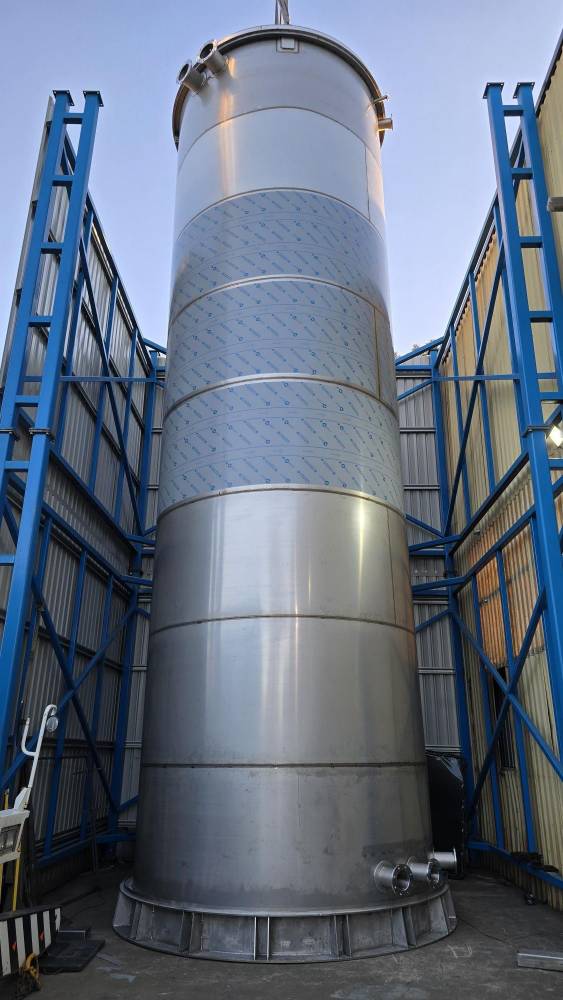
Water Treatment Tanks We Design and Build
Our range of stainless steel tanks for water treatment covers every stage of a plant, from chemical storage to final treated water.
- Chemical storage and day tanks, with bunding, venting and scrubber connections designed in
- Chemical dosing tanks and dosing skids
- Clear water, treated water and permeate tanks
- Membrane CIP tanks for high-temperature cleaning cycles
- Neutralisation and pH correction tanks
- Sludge, settling and holding tanks, with mixers where the duty needs them
- Contact tanks and pressure vessels designed and built to AS 1210
- Balance, buffer and bulk storage tanks
- Process water storage tanks for food and industrial plants
- Custom vessels for treatment equipment manufacturers
Each tank is designed around its duty: the fluid, its chloride and chlorine levels, operating temperature, pressure, and the space it has to fit into on site.
Who We Build For
We supply stainless steel tanks for water treatment to four main groups of customers.
Water and wastewater treatment operators
Who need storage, dosing and process vessels for new plant or expansions.
Treatment equipment manufacturers
Who need a fabrication partner to build the stainless vessels inside their systems, to their drawings or ours.
Councils and their contractors
Delivering sewage and water treatment upgrades.
Food, beverage and industrial plants
That treat, store or recycle process water on site.
Stainless Steel Grades for Water Treatment
Grade selection for stainless steel tanks in water treatment depends mainly on chloride concentration and residual chlorine, with temperature and pH moving the thresholds. We work through this with you at design stage, using your water analysis.
| Service | Typical chloride | Recommended grade |
|---|---|---|
| Raw and clear water, low chloride | Under ~50 mg/L | 304/304L |
| Finished and chlorinated potable water | Up to ~200 mg/L | 304/304L or 316L, depending on residual chlorine |
| Higher-chloride source water | ~200–1,000 mg/L | 316L |
| Brine, RO reject, softener regeneration | Over 1,000 mg/L | Duplex 2205 or higher-molybdenum grades |
| Seawater and desalination | Very high | Super duplex or specialist alloys, specified per analysis |
| Hot water and high-temperature service | Any | Duplex |
How these thresholds are set. The Nickel Institute’s guidance for potable water treatment plants gives crevice corrosion of 304/304L as rare below about 200 mg/L of chloride, and 316/316L as rare below about 1,000 mg/L at typical pH. It recommends a conservative working limit of about 50 mg/L for 304/304L and about 250 mg/L for 316/316L, which is the basis we design to unless your own water analysis supports a different choice.
Residual chlorine. The same guidance notes that 304L can become vulnerable to crevice corrosion in the 3 to 5 mg/L residual chlorine range, and performs well in finished water at around 1.8 mg/L. Where residual chlorine is higher, 316L is the usual specification.
Temperature. Austenitic grades such as 304 and 316 become more susceptible to chloride stress corrosion cracking as temperature rises, with around 60°C a common design threshold. Duplex grades such as SAF 2205 have roughly double the yield strength of 316 and much higher resistance, which is why we specify duplex for hot water duty.
Where another material suits better. Concentrated sodium hypochlorite at dosing strength, and some concentrated acids, are better stored in lined or plastic tanks. If your duty falls into that category, we’ll tell you at enquiry stage.
We fabricate in 304, 316, 316L, SAF 2205 and SAF 2507.
How We Fabricate for Water Service
Stainless steel tanks in water treatment service need a fabrication standard that suits wet, chlorinated and sometimes hot duty. These are the practices we build into every vessel.
Full-penetration welds and crevice-free internals
No lap joints or unsealed backing bars inside the vessel, so there’s nowhere for deposits to settle or corrosion to start.
Pickling and passivation
Welds are dressed and internal surfaces pickled and passivated to restore the passive layer, with records supplied.
Stainless kept separate from carbon steel
Dedicated tooling, separate handling and storage in the workshop, and isolation from carbon steel supports in the installed design.
Drainable design
Floors, outlets and low points designed to drain fully, with no dead legs and sample points that can be flushed.
Designed for the real duty
Grade selected against the maximum operating temperature, vents sized for your fill and draw rates, and vacuum protection designed in.
Every vessel labelled
Each tank we build carries a permanent stainless steel identification label.
Standards and Documentation
We design and fabricate stainless steel tanks for water treatment to the Australian Standards your project calls for.
| Standard | Covers |
|---|---|
| AS/NZS 4020 | Products in contact with drinking water |
| AS 1210 | Pressure vessels, including contact tanks, filter vessels and air receivers |
| AS 1692 | Steel tanks for flammable and combustible liquids, for chemical storage on site |
| AS/NZS 1554.6 | Welding of stainless steels |
We design and build to AS 1210 in house and engage a third-party certifier where the project requires one. Stainless Tank & Mix is certified to ISO 9001:2015, ISO 45001:2018 and ISO 14001:2015.
Documentation supplied with your tank can include:
- Material test certificates traceable to the plate
- Weld procedure specifications, and welder qualifications for work that requires them
- Weld maps and non-destructive testing where specified
- Pickling and passivation records
- Hydrostatic or leak test records
- Factory Acceptance Test and Site Acceptance Test reports
- As-built drawings and an operation and maintenance manual
We confirm the documentation pack at quote stage.
From Design to Commissioning
We handle the full project in house, from the first conversation to handover.
Step 1Concept
We start with the duty, the water analysis and the site constraints, and build a clear scope with you. Many projects begin with an outcome and a site rather than a finished specification, and we develop the design from there.
Step 2Design
Engineering, 3D modelling, FEA where required, P&IDs and design approval.
Step 3Fabrication
Built in our Minto workshop with full traceability.
Step 4Quality assurance
Inspection, testing and documentation before anything leaves the workshop.
Step 5Installation
On-site assembly and connection. We run two mobile cranes and bring in a telehandler or larger crane as site access requires.
Step 6Commissioning and handover
Performance checks and customer sign-off.
Large Tanks and Site-Built Tanks
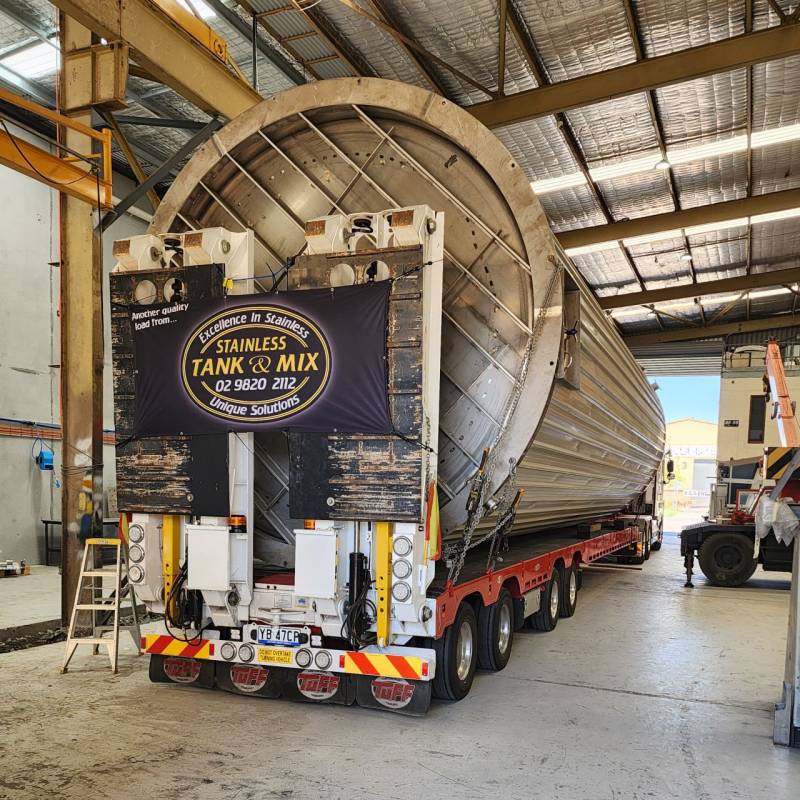
Tank diameter determines how a large vessel reaches site. Up to 3.5 metres in diameter, a tank travels under wide-load conditions without an escort. Above 3.5 metres an escort is required, and larger again a police escort. Tanks up to around 7 metres can be transported on a restricted route, with bridges and overhead wires setting the practical limits.
Beyond that, we build the tank on site by moving the fabrication line to your location. This removes the size limit entirely, and site-built tanks well beyond 600,000 litres are possible.
Skid-Mounted Dosing and CIP Packages
For dosing and smaller process duties, a skid-mounted package is often the most efficient option. It’s assembled and tested in our workshop, delivered as a single lift, and connected on site, which reduces installation time in a live plant and allows a full Factory Acceptance Test before delivery.
We supply the complete package: vessels, frame, pipework, supports, pumps and instruments. Controls and PLC programming are delivered with specialist programming partners, and we recommend raising programming requirements early where the shutdown window is tight.
Recent Water Treatment and Process Projects
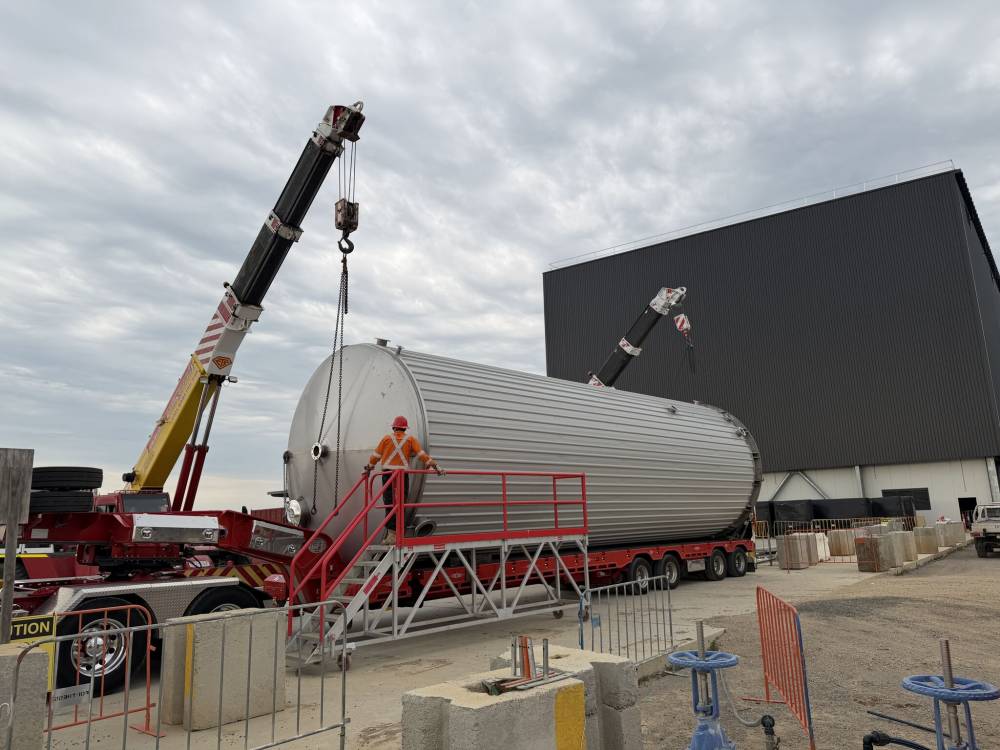
Baiada Poultry, Tamworth: process water storage. Two 100,000 litre tanks and one 30,000 litre tank for Baiada’s new poultry processing plant. The chilled water tanks are 316 stainless steel and the hot water tank is SAF 2205 duplex, all insulated and clad. Read the project.
Our client, a Sydney wastewater treatment operator: 14 × 85,000 litre wastewater tanks
Currently in build, and the largest order by quantity in our history. Our client treats wastewater collected from other operators, including chemically treated water where solids are floated off and dewatered, oily water from spills and stormwater, and septic pump-outs.
Our client, an Australian water treatment specialist for sewage applications: vessels for council sewage treatment
Our client builds treatment equipment for council sewage facilities. The relationship began with a single trial job and has continued with ongoing work since.
Our client, a global process equipment manufacturer: process equipment
Following a first project, our client returned with larger items of the same style. The current job is heading to Western Australia.
Why Stainless Tank & Mix
Design and fabrication under one roof
Engineering, fabrication, installation and commissioning are all done by our own team in Minto.
Over 50 years in stainless steel
Family-owned and third generation, designing and building stainless process equipment in Australia since 1974.
Hygienic fabrication standards
The finish, weld quality and documentation we deliver for food, dairy and pharmaceutical clients, applied to stainless steel tanks for water treatment and wastewater.
Any size
From 2 litres to 600,000 litres and beyond, shop-built or built on your site.
Information That Helps Us Quote
To prepare an accurate quote for stainless steel tanks for water treatment, it helps to have:
- The fluid and its concentration
- Chloride level and residual chlorine, in mg/L
- Operating and maximum temperature
- Required capacity and any space limits, such as roof height, door width or slab size
- Whether the tank is pressurised or atmospheric
- Indoor or outdoor installation, and any insulation or cladding requirement
- Bunding requirements
- Standards and documentation required
- Nozzles, fittings and instruments, or a nozzle schedule
- Site access, and whether the plant will be operating during installation
- Your timing and any shutdown window
If you don’t have all of this yet, send what you have. We’ll work through the rest with you.
Frequently Asked Questions
What grade of stainless steel is used for water treatment tanks?
It depends on the chloride level, residual chlorine and temperature. 304/304L suits low-chloride raw and finished water. 316L is used for higher-chloride water and higher residual chlorine. Duplex grades such as SAF 2205 are used for brine, RO reject and hot water service.
Is 304 stainless steel suitable for potable water tanks?
Yes, for low-chloride water. Published guidance puts crevice corrosion of 304/304L as rare below about 200 mg/L of chloride, with a conservative working limit of about 50 mg/L. Residual chlorine above about 3 mg/L favours 316L.
Can stainless steel tanks store sodium hypochlorite?
Not at dosing concentration. Concentrated sodium hypochlorite attacks stainless steel of any grade, and a lined or plastic tank is the correct choice.
What Australian standards apply to stainless steel tanks in water treatment plants?
AS/NZS 4020 for products in contact with drinking water, AS 1210 for pressure vessels, AS/NZS 1554.6 for welding of stainless steels, and AS 1692 for tanks storing flammable or combustible chemicals.
Do stainless steel water tanks need passivation?
Yes. Welding leaves heat tint on the surface, which reduces corrosion resistance. Pickling and passivation restore the passive layer, and the records form part of the handover documentation.
What size stainless steel tanks can you build?
From 2 litres to 600,000 litres and beyond. Tanks up to 3.5 metres in diameter travel by road without an escort, larger tanks can be transported with escorts on restricted routes, and the largest tanks are built on site.
Do you supply skid-mounted dosing systems?
Yes. We supply complete skid-mounted dosing and CIP packages, including vessels, frame, pipework, pumps and instruments, assembled and tested in our workshop before delivery.
Where are your stainless steel water treatment tanks made?
In our workshop at 4 Pembury Road, Minto NSW, in south-west Sydney. We deliver and install stainless steel tanks for water treatment plants across Australia.
Talk to Us About Your Water Treatment Project
Send us your duty and site details and our team will come back with a design approach and quote. You’re welcome to visit the Minto workshop and see current projects in build.
Phone: (02) 9820 2112 · Email: ua.moc.ximdnaknatsselniatsobfsctd-596c9c@db · Workshop: 4 Pembury Road, Minto NSW 2566